Ken Thomas, Revenue Architect for Founder-Led Businesses

Turn founder instinct into a revenue system built for what's next.

You've already worked out how to win revenue. I capture your sales thinking, sharpen it with proven practice, and build it into a repeatable system your team can use to win better deals, onboard faster, and support the next stage, whether that's scaling, selling, or stepping back.

Follow along on LinkedIn, Instagram, and TikTok.

01

The best way your business wins already lives with you.


You know the customer, the pitch, the objections, the timing, and the commercial judgement that gets deals done. That know-how is the brain the business runs on, and it built everything you have. Right now it lives in one place, with you, where your team and your AI cannot reach it. The opportunity is to turn it into something the whole business can use consistently, not just something that runs through you.

02

From how you win to a system the team can run.


Picture how you win written down so clearly that other people can actually do it. A new hire can follow it. Your team generates leads and closes without you in the room. Your AI tools finally have something real to work from, because it is how you win, captured properly. From there the choice is yours: scale the business, sell it for what a real system is worth, or step back from the day-to-day. That is what revenue independence means. It does not mean you never sell again. It means you finally get to choose.

03

This is Founder Revenue Architecture.


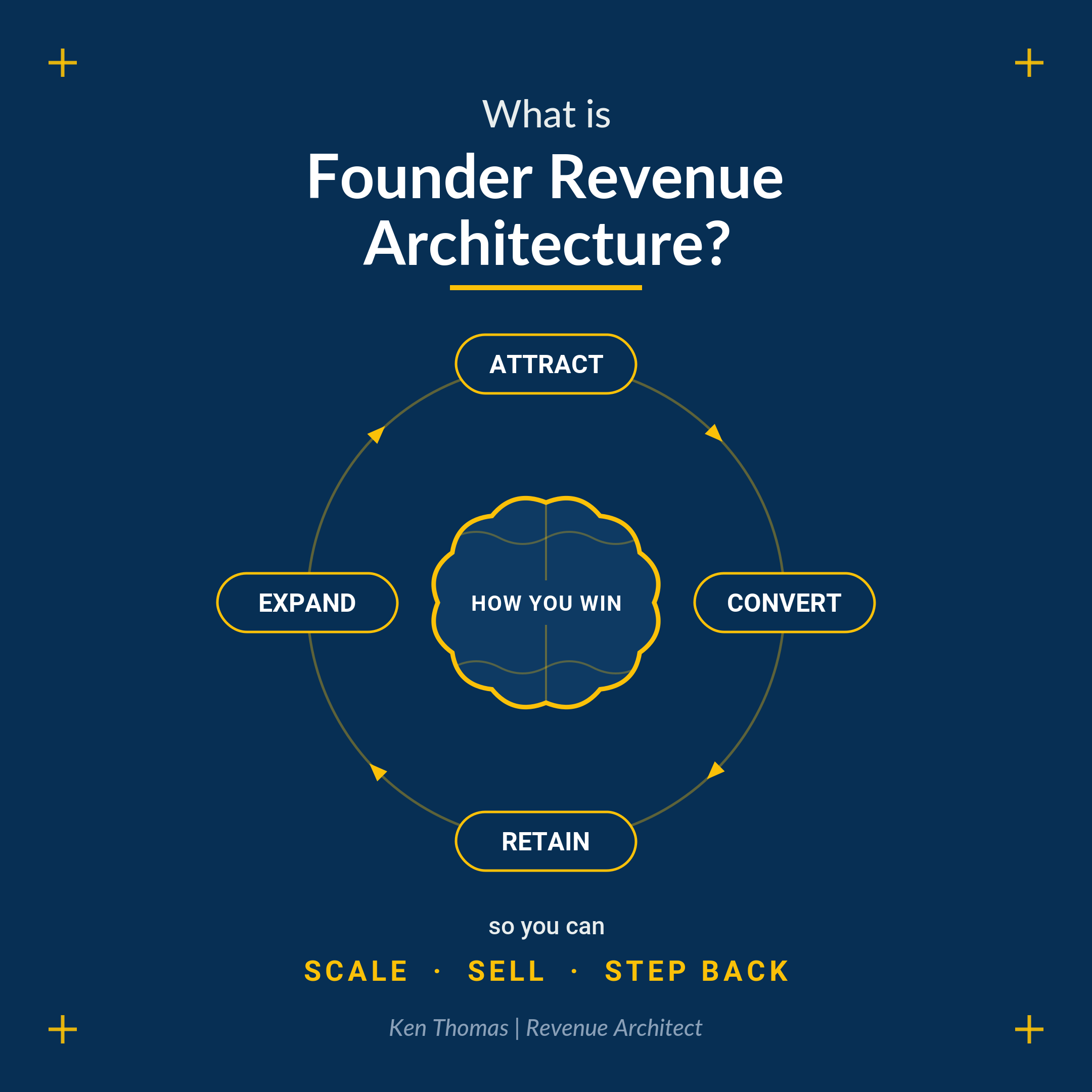
It is the discipline of getting how you win revenue out of your head, and structuring it across how you find clients, win the work, keep them, and grow them (attract, convert, retain, expand). The result is a revenue playbook, which becomes the brain your revenue function operates from. It defines the processes your team works from and the context your AI runs on, and is built around how your business actually wins, never from a cookie-cutter template.

What is Founder Revenue Architecture: the brain, how you win, at the centre of attract, convert, retain, and expand, leading to scale, sell, step back

It works, and here is the proof.


$5.6MAccounting firm on track this coming financial year, up from $1M
12Deals in three months for a cybersecurity platform, up from 7 in its first year
$1M+Self-sourced pipeline from one internal move into sales, in six months
11 of 12Months of growth at a labour-hire business, after two years of decline
04

When you are ready to build it.


The build and the hands-on execution run through Founder Revenue Code, the company I built with Pete Solway. We capture how you win, then place a dedicated revenue leader, a fractional Chief Revenue Officer, inside to run it with your team to a milestone, and then we step back. You own the playbook and the IP.

How scalable is the way your business sells?

The Revenue Independence Assessment takes about 7 minutes and shows you how much of your way of winning revenue is repeatable, teachable and ready to scale, before any conversation.

Take the assessment

Common questions founders ask


It was learned over years and never written down, so right now it lives only in your head, where your team and your AI cannot reach it. Founder Revenue Architecture gets it out and into a playbook your team can run and your AI can work from.

Document how you win revenue across attract, convert, retain, and expand, then put someone inside to embed it with your team. That is what Ken Thomas does through Founder Revenue Code.

Buyers and successors pay for a system, not a personality. Turning how you win revenue into a documented, repeatable system is what lets you scale, sell, or step back.

Ken Thomas is a Revenue Architect who helps Australian founder-led businesses turn how they win revenue into a system the business can run on.

The discipline of getting how a founder-led business wins revenue out of the founder's head, and structuring it across attract, convert, retain, and expand, so it becomes the brain the revenue function operates from, defining the processes the team works from and the context the AI runs on.

Yes. The same playbook becomes the context your AI works from. A tool with the wrong foundations just helps you spin faster, and the right context is how you win, captured properly, so your automation runs on how the business actually wins.